Normal-Tumor-Immune-Unhealthy Diet Model
A mathematical framework describing interactions between normal cells, tumor cells, and immune response
Model Overview
The NTIUNHDM is represented as a system of three differential equations capturing the interactions between:
- N(t): Normal (healthy) cells
- T(t): Tumor cells
- I(t): Immune cells
Model Interactions
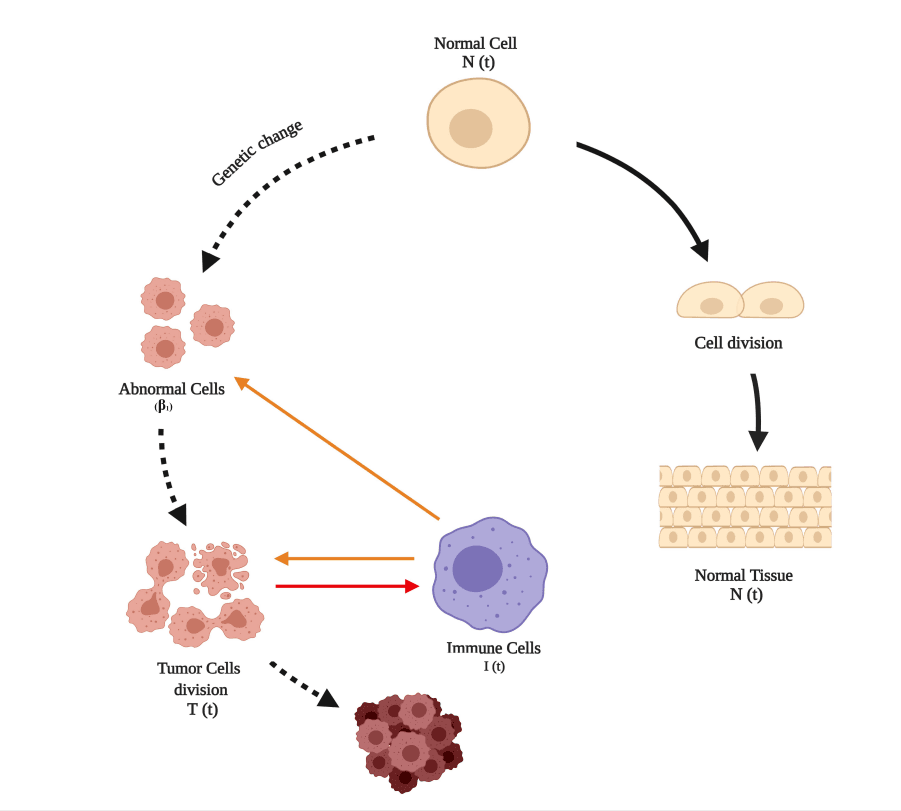
Diagram showing the interactions between normal cells, tumor cells, immune cells, and dietary factors
Key Model Assumptions
Normal and tumor cells follow logistic growth, accounting for resource limitations like oxygen, nutrients, and space.
Tumor cells compete with normal cells for resources, introducing an inhibitory effect on normal cell survival.
The immune system eliminates tumor cells but can also attack normal cells. Its activation depends on both cell types.
An unhealthy diet weakens immune function, reducing effectiveness against tumor cells.
Model Equations
Parameters:
Biological Justifications
The logistic term ensures normal cells stabilize due to limited resources, reflecting tissue homeostasis.
Tumor cells outcompete normal cells, representing cancer progression where malignant cells displace healthy tissue.
Immune cells are stimulated by both cell types but constrained by saturation and exhaustion effects.
An unhealthy diet affects immune function, altering the balance between tumor suppression and immune exhaustion.